Load Cell

Load Cell Accuracy Classes: C3, C6 & OIML R60

A load cell accuracy class indicates the measurement performance a sensor is designed to achieve under specified conditions. C3 and C6 ...
How to Choose the Right Load Cell: Capacity, Accuracy and Environment
Selecting the right load cell involves more than simply choosing a sensor based on weight capacity. The load cell must match the applic...
Load Cell Troubleshooting: 12 Common Problems and How to Fix Them
Load cells are essential components in weighing and force-measurement systems, but problems with the sensor, wiring, mounting, or surro...

Load Cell Installation and Mounting Guide
Correct load cell installation requires proper mounting, alignment, load direction, and mechanical restraint. Poor installation can cau...

Load Cell Calibration: Step-by-Step Procedure and How Often to Do It
Load cell calibration compares the measured output against known reference loads to verify and, when necessary, adjust accuracy. Calibr...
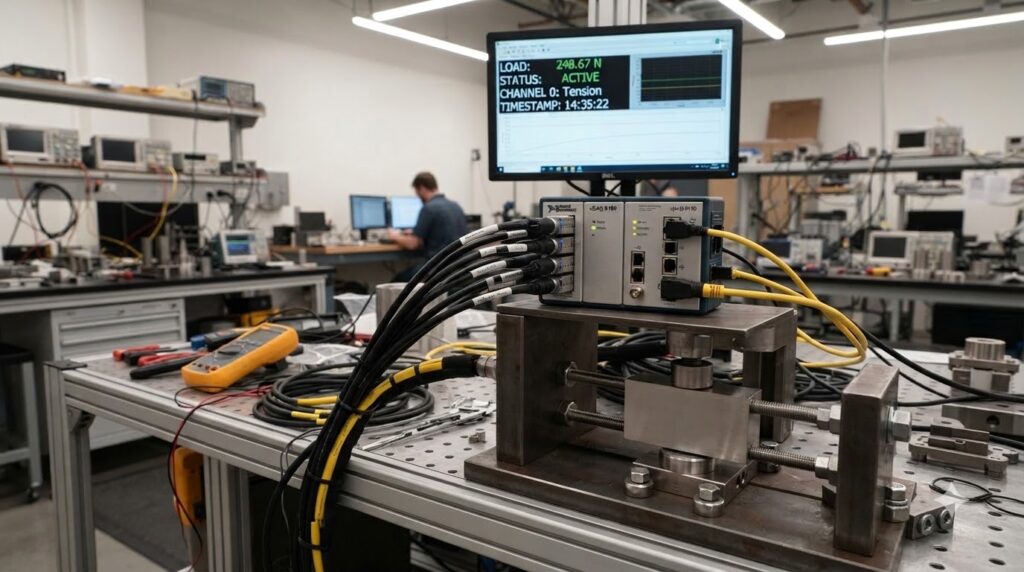
How to Connect a Load Cell to a Data Acquisition System
To connect a load cell to a data acquisition system, the load-cell signal typically passes through a signal conditioner or amplifier be...
The Wheatstone Bridge in a Load Cell, Explained Simply
A load cell Wheatstone bridge is an electrical circuit that converts tiny resistance changes in strain gauges into a measurable voltage...

Strain Gauge vs Load Cell: What’s the Difference?
A strain gauge is a sensing element that measures mechanical strain, while a load cell is a complete force or weight sensor that common...

Strain Gauge Load Cells: Working Principle, Diagram and Wiring
A strain gauge load cell is a precision force measurement sensor that converts an applied load into a measurable electrical signal. It ...
Load Cell Types Explained: Which One Do You Need?
Load cell types vary by mechanical design, force direction, capacity, accuracy, and application. Choosing the right load cell is essent...